Connecting innovation, policy, and practice
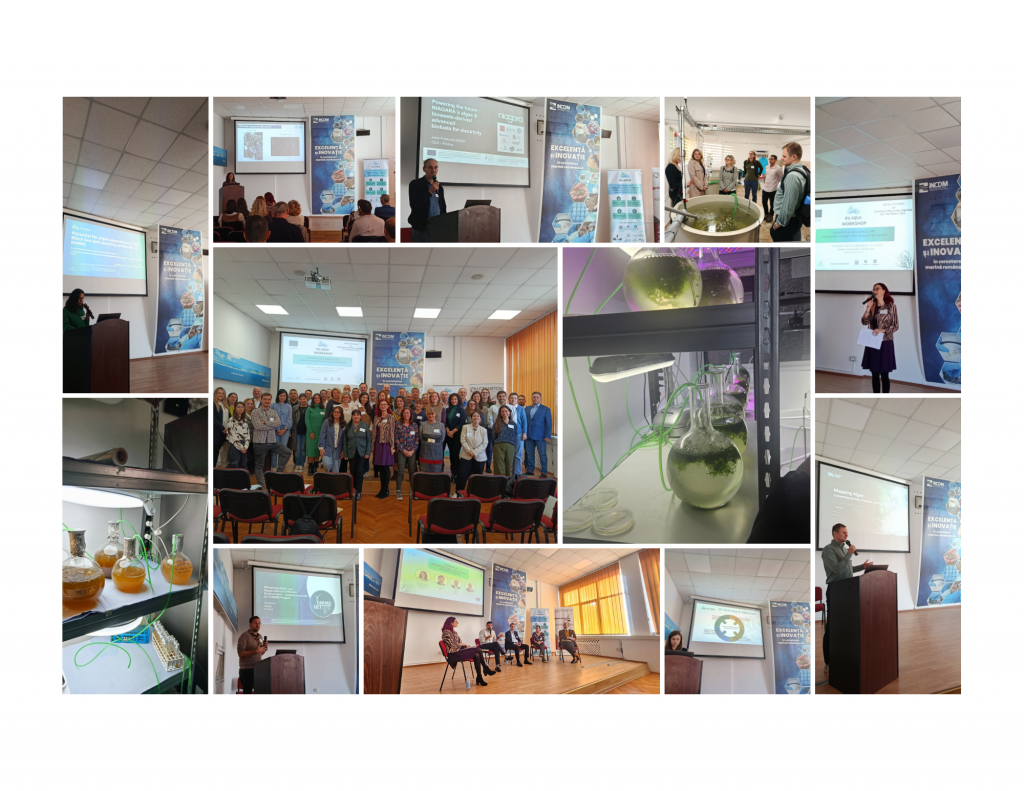
The workshop served as a dynamic platform to exchange knowledge, present the EX-AQUA roadmap, and co-design future actions for algae aquaculture in the Black Sea. Discussions and interactive sessions brought together leading European initiatives and local expertise to explore how algae cultivation can drive blue growth, environmental restoration, and economic opportunities.
🔹 Session 1 – Innovation and Inspiration
European initiatives such as EATiP, SEAWHEAT, ULTFARMS, and INNOAQUA showcased how algae research is translating into real-world impact. From offshore multi-use systems and seaweed biorefineries to circular aquaculture and AI-driven monitoring, participants saw how Europe’s algae community is innovating at every level.
🔹 Session 2 – EX-AQUA roadmap and progress
EX-AQUA partners presented advances in both microalgae (Spirulina, Chlorella) and macroalgae (Ulva, Cystoseira) cultivation under Black Sea conditions. The EX-AQUA roadmap outlined a ten-year vision positioning NIMRD as a regional hub for algae research and innovation. Results show tangible progress toward integrating science, restoration, and enterprise for a sustainable blue future.
🔹 Session 3 – Algae applications and market potential
Projects like NOVAFOODIES, AlgaeProBANOS, NIAGARA, and SEAMARK revealed the expanding potential of algae across food, feed, pharmaceuticals, and bioenergy. From fucoidan-based therapeutics to zero-carbon biorefineries and functional foods, the session highlighted algae’s unique role in supporting Europe’s circular and low-carbon economy.
🔹 Session 4 – Industry insights and future pathways
The final session brought science to the marketplace — shifting the discussion from laboratory innovation to the real-world conditions needed for a thriving algae industry in the Black Sea. The roundtable brought together voices from technology developers, European aquaculture networks, and investors, generating a candid and constructive dialogue about the viability, competitiveness, and future direction of algae aquaculture in the region.
Speakers agreed that algae cultivation is no longer an experimental curiosity. Across Europe, several species and systems have already proven to be technically and commercially viable. For the Black Sea, the question is not if algae aquaculture can work, but how fast and how far it can grow under the right conditions. Participants stressed that the region’s comparative advantage lies in its diversity: of ecosystems, of scientific expertise, and of opportunities to link algae with other blue economy activities such as fisheries, aquaculture, and renewable energy.
However, a number of barriers were identified as critical bottlenecks for growth:
-Regulatory uncertainty, especially in marine spatial planning and licensing procedures, continues to delay new initiatives and discourage investment.
–Species-specific restrictions limit the cultivation of ecologically and economically important macroalgae, creating a disconnect between innovation potential and legal frameworks.
-Fragmented supply chains and processing capacity make it difficult to ensure consistent quality, scalability, and competitiveness across the region.
-Insufficient pilot and demonstration infrastructure hampers the validation of technologies and the ability of entrepreneurs to attract investors.
-Low consumer awareness and inconsistent product standards constrain market demand and the social acceptance of new algae-based products.
The conversation quickly moved from identifying challenges to exploring what truly makes a regional algae sector successful. Participants converged around three interconnected success factors:
- Building social acceptance and awareness – Making algae familiar, visible, and valued by local communities and consumers was seen as a top priority. Education and outreach initiatives can help build trust and spark curiosity, transforming algae from a niche topic into a shared regional opportunity.
- Creating visible, testable pilot sites – Demonstration and pilot-scale facilities are essential to bridge the gap between research and commercial reality. These sites can serve as open laboratories where regulators observe environmental impacts, investors assess risks, and local stakeholders see tangible benefits.
- Embracing continuous experimentation and adaptive innovation – The industry’s success depends on learning-by-doing. Participants emphasised the importance of flexible governance that allows new species, cultivation methods, and business models to be tested and refined.
From an investment perspective, the discussion noted that profitability is increasingly tied to ecological co-benefits. Algae cultivation can improve water quality, enhance biodiversity, and capture carbon — adding environmental value to financial returns. These co-benefits make algae aquaculture an attractive component of sustainable investment portfolios and circular economy strategies.
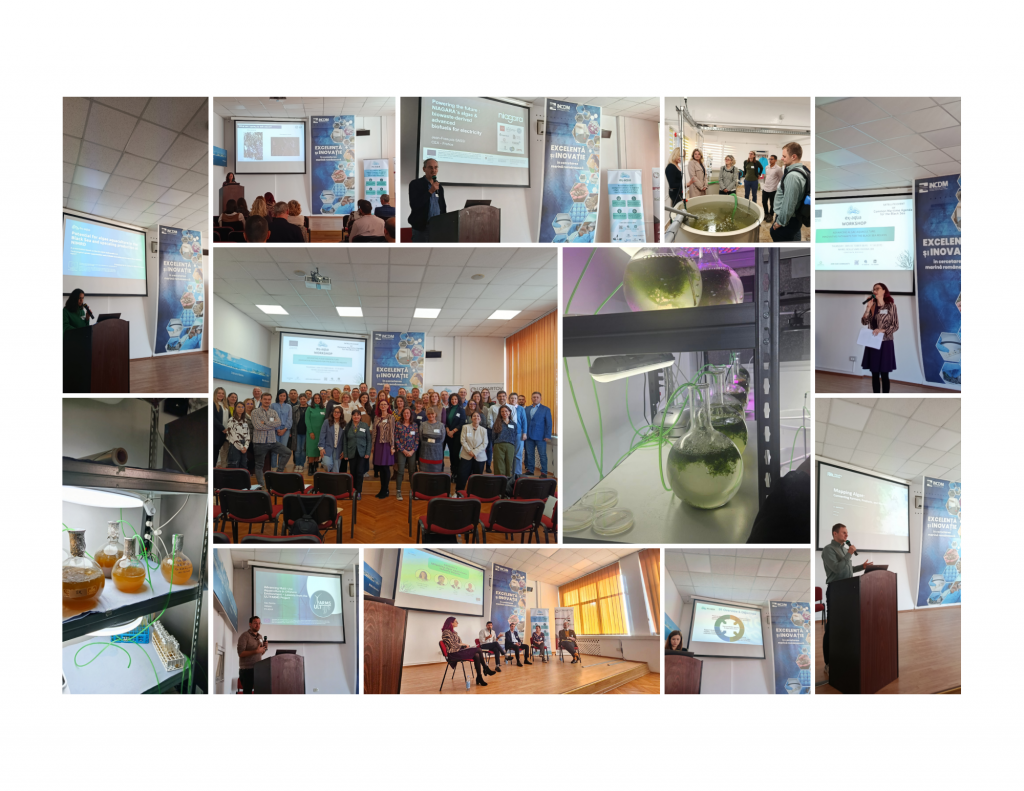
A collective commitment to the future
The overarching message of the workshop was clear: the Black Sea is ready to move from promise to practice. With strong scientific foundations, regional collaboration, and growing policy support, algae aquaculture can become a cornerstone of the Black Sea’s sustainable blue economy.
EX-AQUA and its partners have laid the groundwork for an algae-driven transformation of the Black Sea. By aligning research, industry, and policy, the region can position itself not just as a participant, but as a leader shaping Europe’s algae bioeconomy, restoring ecosystems, diversifying coastal economies, and contributing to global sustainability goals.